Have you ever had someone say that they knew what was going to happen before it did happen? Or perhaps they were completely taken aback by the twist in your story. Now, we’d prefer the latter, but the best type of plot twist is when the reader can piece it together later, or when the plot twist happens.
You want them gasping and saying “that’s why they said that.” Or “That’s why character B was acting shady.” It makes for a better payoff, and is rewarding to your readers. Making them want to come back for more of your books.
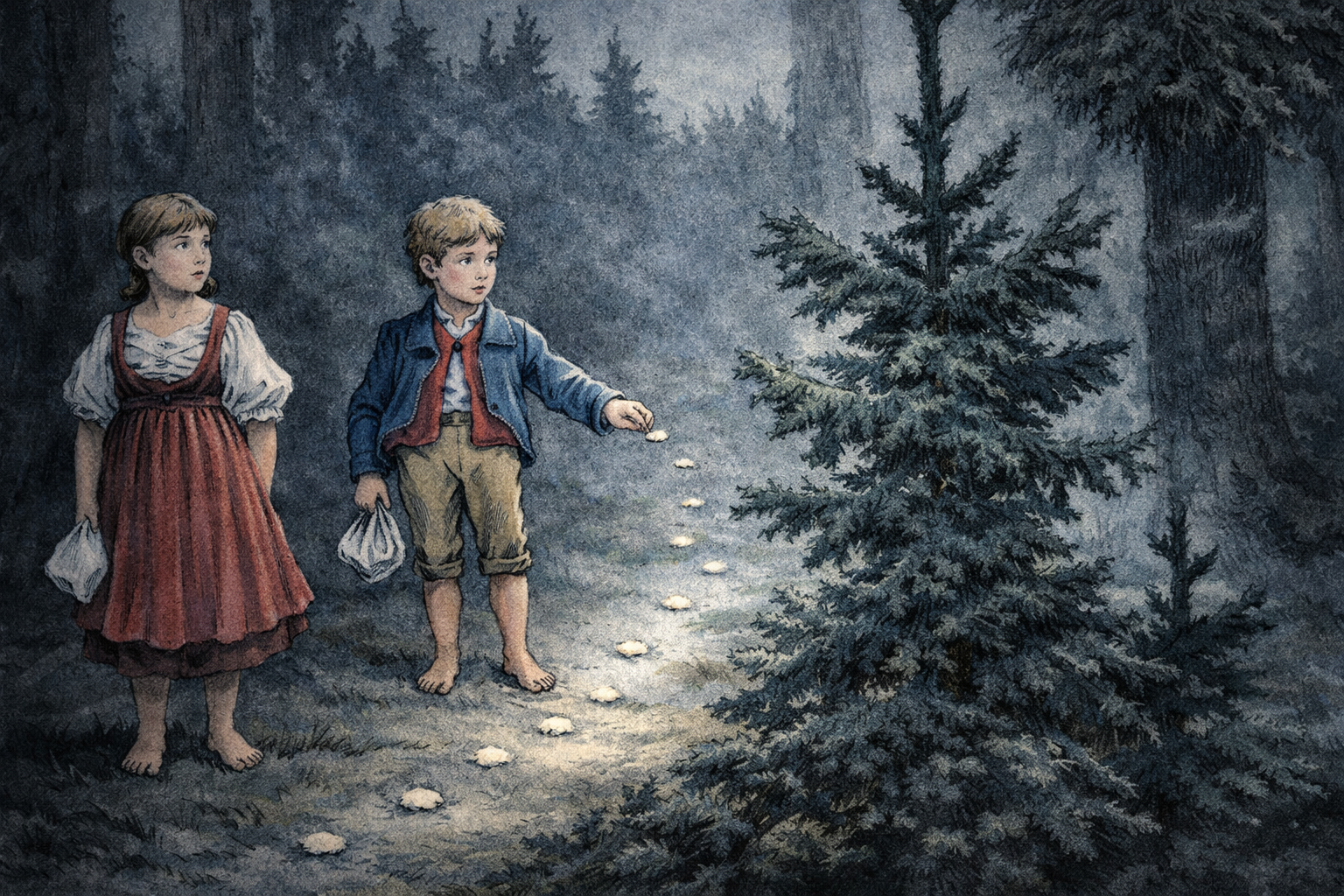
Foreshadowing is the act of dropping breadcrumbs through your story to hint at what’s coming. In most stories, this can be hinting at the plot twist. In a romance novel, you might foreshadow the love interest, or why things always go wrong for them when it comes to love. There are many things you can foreshadow in writing, which I will get to in a minute.
But first, you need to know why it’s important. Foreshadowing is a good tool to have in your author’s kit. When done well and correctly, Foreshadowing brings tension and atmosphere into your story, which will hook your readers into wanting to know more and keep them reading.
Oh, also in this post I offer a free foreshadowing planner and tracker.
What can You Foreshadow in Your Novel?
As I promised, here is a list of what you can foreshadow in your stories. This list should fit most genres in writing.
Plot Twists
- Betrayals
- Unexpected deaths
- Secret identities or pasts
- Hidden agendas
- Reversals of power or allegiance
Character Arcs
- A hero’s fall or corruption
- Redemption arcs
- Loss of innocence
- Identity crises
- Acts of bravery or cowardice
Relationship Developments
- Future romances
- Friendships dissolving or strengthening
- Familial conflict or reconciliation
- Rivalries becoming alliances (or vice versa)
Key Plot Points
- Major failures or successes
- Climactic battles or showdowns
- Turning points (e.g., “no going back” moments)
- Reveals of critical information or secrets
Character Decisions or Sacrifices
- Choosing between two conflicting ideals (eg. Love over duty)
- Refusing to act (and the cost of it)
- Choosing to betray, forgive, or destroy
Moral or Ethical Dilemmas
- Conflicts between loyalty, justice, survival, or love
- Situations where right and wrong blur
Setting-Based Events
- A location’s hidden dangers or secrets
- Environmental collapse or natural disasters
- War or invasion on the horizon
The Climax or Final Confrontation
- Who will face whom
- Emotional stakes
- The final choice or cost
Symbolic Outcomes or Fate
- A prophecy or vision coming true (in expected or subverted ways)
- A repeating pattern finally broken or fulfilled
The Villain’s True Goal or Identity
- Hints toward their connection to the hero
- Secret motivations
- Future betrayals or ambushes
Mysteries or Secrets
- Who committed a crime
- What a character is hiding
- Origins of a curse, artifact, or legend
Final Outcomes
- Who lives, who dies
- Who ends up alone or changed
- What remains when the dust settles
These are just a few I could think of, but there are probably more. If you can think of any while reading, comment them down below.
Subtle Foreshadowing Vs Heavy-Handed Foreshadowing
There are two ways you can go about foreshadowing in your story. Each designed to evoke a different atmosphere.
Subtle Foreshadowing
Subtle Foreshadowing is where you drop small hints throughout your story to hint at something happening in the future.
This can look like a small passing comment from a character. It would seem insignificant at first, but gain meaning later.
Subtle Example: “Don’t forget your thermal socks this time, Jade. You almost got frost bite last time.”
This would seem like a joke or banter between friends, depending on who said it, or how you set it up.
Later, Jade could fall ill on a mountain hike, becoming cold and blue in the lips. They check her over and find that one of her feet has gone numb and the first signs of frost bite have set in.
To you, this might seem obvious, but with the right set up, like a joke to a friend, it would be subtle to your reader.
Heavy-Handed Foreshadowing
Heavy-handed foreshadowing is where you out right state that something will happen. The sound that was trending on TikTok a while back comes to mind with this foreshadowing. “It was at this moment, he knew he f*ucked up.”
However, this type of foreshadowing works best for certain genres. Middle grade and lower can work best for Heavy-Handed foreshadowing. It can also work well for comedic exaggeration in parody and satire books. Or perhaps in horror or pulp fiction, for dramatic irony, where the genre tropes are a part of the fun. And you can even use it in tragedy where the dramatics are intentional.
Heavy-Handed Example: He should have turned back then. Turned and ran miles in the other direction.
And then the bad thing would happen.
As you can probably guess, this gives a much shorter span of tension, and it should be used sparingly if you chose to use heavy-handed foreshadowing.
Types of Foreshadowing You can Use in Your Story
Now, down to ways you can foreshadow in your book. There are many ways you can drop in those little bread crumbs for your reader.
Symbolic Foreshadowing
Symbolic foreshadowing is where you use items, animals’ dreams, or even weather patterns as the bread crumbs. Almost like bad omens.
Here are a few ways I thought of:
- Broken objects that have meaning
- Animals that have a symbolic meaning (ravens and death)
- Weather patterns
- Recurring dreams, or dream meanings.
- Animals acting strangely
- Visions
- Children’s rhymes or folk tales.
Dialogue Based Foreshadowing
Dialogue can be a great way to foreshadow, as it can be a huge reward for your reader when it comes to fruition. The “Ahh, that’s why they said that,” moment.
The dialogue can be made to have double meaning, a throw away comment, maybe even in irony, before or after the event. And even a throw away comment your reader won’t think anything of until later, when all the pieces fit together.
Here are a few ways you can use dialogue to foreshadow:
- Vague warnings
- Prophetic or symbolic statements
- Contradictions or irony
- Slip of the tongue or hesitations
- Repetitions or callbacks
- Overheard or misunderstood dialogue
- Casual mentions of settings and objects
Behavioral Clues
A character’s habits, quirks, or change in behaviour can foreshadow an important event in your story.
Here is a list of ways to foreshadow with behavioral clues:
- Changes in character routine
- Nervous motions or tics
- Repeated Gestures hinting to a lie
- A character avoiding others, characters or objects
- Overcompensation in emotions or confidence
- Obsessions or fixations
- Sudden shifts in mood
- Unexplained knowledge or skill
- Never answering with the full truth
Like I’ve said above, these are just a few ways, but you use them to guide you or inspire your own foreshadowing.
Worldbuilding Details
The world you built for your story can even foreshadow events in your book. From the Folklore to the history, and even the law. Done right will drop those clues we want to lay out for the reader.
A list of ways you can use your worldbuilding to foreshadow:
- Historical parallels or repetition
- Local superstitions or sayings
- Ruins or architecture hinting at something of the past
- Laws
- Taboos
- Environmental changes (can be symbolic)
- Religious beliefs
- Prophecies
- Relics and its history
Again, only a few, as using the world to foreshadow can be an almost endless list.
Echoes & Repetitions
Echoes and repetitions are a great tool to have in your writer’s toolbox. When something is repeated, it can create a thematic cohesion, subtlety building up to the payoff. Although it is important to change some of the details as you go, a change in emotion, or in context, and so on.
Here is a list of ways you can use echoes and repetitions to foreshadow:
- Repeated Phrases or lines
- Mirrored scenes
- Recurring imagery
- Behavioral echoes
- Dreams
- Songs (Think Jeepers Creepers)
- Prophesies
- Dreams
- Objects or animals
As you can probably see, you can combine anything on the list to make your foreshadowing fit into your story. For example of songs that play before something bad happens, is an echo and symbolic foreshadowing. Or a change in weather is symbolic and a use of worldbuilding details to foreshadow. Anyway, you get the point here, on to the next.
Why Foreshadowing Fails – And How to Avoid it
There are three main ways that foreshadowing can fail in your book, and they may seem obvious, but it can happen to the best of us. So In the section, we will look at the ways foreshadowing can fail, and how you can avoid it, as best as you can.
Too Obvious
Have you ever been watching a film and correctly guessed what was gonna happen at every turn. Anyone who studied media will understand this at the bottom of their poor hearts, but it does ruin your experience of the film. And that is exactly what it can feel like for the reader. They’ll get too bored at guessing what is coming next in your story. Although this can be down to clichés, too.
Too Vague
No, when we talk about foreshadowing being too vague, we don’t mean when the reader is still smacked in the face by the plot twist or event. As when the event happens, the reader should then go “oohhhh, that’s why x, y, z happened.” No, too vague foreshadowing is where the reader is smacked in the face and the clues were basically invisible to them. There was no puzzle to solve anywhere in your story.
No Payoff
This one, I think, hits the reader in the gut the hardest. If your readers pick up on all those little breadcrumbs you left, they get excited, guessing what will happen and then… nothing happens. If that happens, where your event or plot twist either doesn’t really happen, or just doesn’t feel on par with what you were hinting at, your reader will be gutted, deflated, and maybe even disappointed.
How to avoid this
Read Your drafts
As we all know, writing and rewriting is what we do. First drafts, second, third. Whatever it is, we read and edit. So ensuring you not done the above with your foreshadowing, read through your drafts with this in mind only, like when you do a plot read to find all those pesky plot holes.
Keep a Foreshadowing Tracker
Having a foreshadowing tracker can be immensely helpful to any writer. Write down any clue in your story you have left, even your ideas on where you can leave clues, so you don’t forget. Then, on top of this, with each bit, note down where and why it links into the twists or important event. When you read through, you can also use the tracker to jot down what’s working and what’s not, helping you later in the editing process.
Use Beta Readers
This one I live by. Use those beta readers. They are such an important part of the writing process, giving you a fresh look at your story and how future readers will feel about your book. You can get beta readers for free or pay for them. But the most important thing when it comes to beta readers is that they are reading in their genre.
Crafting Effective Subtle Foreshadowing
Now that we’ve gone over that, we can move onto the bit where of crafting the foreshadowing in your story to build the tension, and have a satisfying payoff. As you probably know, doing this isn’t just about putting in hints and clues willy nilly through your book. There is a strategy to this, and for each of you, it will be different. But we will go over the basis for you to begin planting those crumbs.
Plant Early and Naturally
When foreshadowing, make sure it is done naturally to the scene, or the characters actions. Don’t place a snowman on a beach, basically. When the clue is shown, it should feel natural and not out of place. Because if it is, it then becomes a heavy-handed clue, which you may not want, genre depending. Any way, some of the best books I’ve read have planted such subtle clues in the first or second chapters. However, you don’t just stop there, you need to continue dropping the clues until you’re close to the big reveal. Which links to the next bit…
Layer the Clues
Think of each clue you leave as a puzzle piece the reader will collect and put together through the book. Some might be a bit more obvious than others, like those solid colour puzzle pieces, and others will be more obvious. But not too obvious to remember. How many clues you have in your story are up to you. It all depends on your style, and how complex your story is.
Trust the Reader
Your reader is not empty-headed. They are clever and most likely enjoy reading, hence why they picked up your book. So, you don’t need to explain everything to them. Use nuances, throw away comments and subtlety. They’ll get it, and will have a much better satisfaction at the end of it all.
Make the Payoff Satisfying
There’s no point placing all those clues if there’s no payoff. Make sure the breadcrumbs lead somewhere. And when the moment comes, don’t let the tension fall. The clues you’ve left should lead to its own little climax.
Conclusion
So there you have it. How to do foreshadowing right… Well, a guide to doing foreshadowing. The thing is, this is just a guide, these are not the law. You can read this whole post and still walk away and do what you, the writer, want to do. Use this post to inspire your plans, or maybe walk away with a new way you can drop clues for your reader. Writing is a creative process, and like all tools you can use, foreshadowing works best when it matches your writer’s voice and the story you’re telling.
But, when done right, it is a very powerful tool that will leave your reader wanting more when they’ve finished your story. It builds the tension they crave.
What is the best line of foreshadowing you have written or read? Drop it in the comments below.
The free foreshadowing planner and tracker can be found here on Ko-Fi.
And don’t forget to subscribe to stay updated when I post.
Go weave your tale,
A. R. Moody

Leave a Reply